
MarTech Data Lab | #5 - A Beige Book for Marketers, AI for Today, and SaaS Trends
A Fed Beige book for marketing, customer feedback, and SaaSy trends

Hi everyone. Sorry for the delay between the last newsletter and this one. As y’all know, life sometimes get in the way of our best intentions. Enough time dwelling on the past, time to think about today and the future. Onward.
💸 The Marketing Economist -
Do you have a ‘Beige Book’ for your users?
Applying the lens of economics to the world of marketing
On a recent episode of the podcast, The Indicator, the hosts had a ceremony for ‘The Beigie Awards’ which is the much more palatable sounding name of the “Summary of Commentary on Current Economic Conditions by Federal Reserve District.” It is a collection from the different branches of the Federal Reserve, that gathers “anecdotal information on current economic conditions in its District through reports from Bank and Branch directors and interviews with key business contacts, economists, market experts, and other sources.” It is a throughline of people and their voices to help fit the narrative of the overall macroeconomic conditions and helps lend stories to the throwing around of facts and numbers that often come in media reports.
The consumer, the laborer, the entrepreneur, and the family; whether it’s discussions around job reports or interest rates, the Beige Book is a goldmine of consumer insight. The Indicator has a semi-annual tradition of giving out awards of what it calls ‘The Beigie Awards’ to highlight some of the more insightful or interesting comments provided to the Federal Reserve. For example, the most recent Beige Book analysis from the Federal Reserve of Philidelpida summarizes economic conditions in January 2023:
On balance, business activity in the Third District appears to have declined slightly after holding steady since the first of July. Inflation and higher interest rates have dampened consumer demand for big-ticket items, including homes and autos. Employment continued to grow slightly even as labor demand eased; business contacts noted an increased willingness to work. Wage growth and inflation continued to subside (and reported price increases were less widespread), but both continued at a moderate pace.
That is a mouthful. The above may be familiar to marketers who need to give an executive report to leadership. A lot of different facts. Key data points. An overall summary of where things stand. That may be a good first step in presenting or sharing knowledge, but context and stories combined with the data points will be a much more impactful message. The Fed goes and breaks down additional analysis on the key concerns. Prices. Labor Markets. Consumer Spending. Manufacturing. And more. A quote from the Fed explains:
Retailers (nonauto) and restaurateurs offered mixed reports: A low-cost retailer reported that falling gas prices had driven stronger sales in December, but a high-end retailer exclaimed that "December is not happening!
The Beige Book Guide for Customer Research
In marketing, which I am just as guilty of, we tend to skew in the direction of analytical insights to provide the guidance we need to make decisions in a sea of uncertainty. How often do we stop and actually check in with our users and customers or have a prescribed framework and regular cadence? Do you have an actual sounding board of users you can go to ask questions, or would you rather spend an extra $100K on your paid social campaign to let the data tell you what but not really the why? (guilty). Qualitative insights are sometimes regarded as a ‘less than’ or nice to have insight. What I have often seen is it comes up when someone remembers to talk to your users when they want something out of them or further validation for ideas they already have pretty much decided on going ahead with anyway. A systematic process, like the Beige Book mandates, can go a long way towards building a sustainable, repeatable process that can be woven into the the quantitative side of insights as well.
Following the simple framework for The Beige Book can be applied to your own customer success, marketing analytics, operations, or whatever you want to call it. Just talk to your users. It can make all the difference in (insert popular growth framework here) whatever you do. It doesn’t need to take an act of Congress, which it eventually took for the Beige Book in 1983. A willingness to listen to your users and have regular contacts with them with put you miles ahead of the competition.
This is how the Federal Reserve runs its customer research program, with a few simple steps:
Beige Book Formula for Marketers: Fed Formula
Time: Published 8x a year
Audience: A mixture of people, from business contacts, economists, market experts, and other sources
Content: Master summary, plus additional user insights in specific focus areas of the economy
HotJar, the analytics software, has a simple formula for customer research that is strikingly similar to the Federal Reserve.
A Beige Book Formula for Marketers: Hotjar’s Formula
Audience: Create Simple User Personas: Focus on the Audience
Content Summary: Conduct Observational Research
Content Details: Conduct Individual Interviews
Insights: Analyze the Data
By integrating the research and insights into a repeatable process, rather than ad-hoc or when you are just seeking answers, instead of being open to questions, will provide much richer insights than your quantitative data can tell you alone
🏗️ 60-Second MarTech: 9,932+ Marketing Tech Tools
At last count (2022) there are about ~10K+ martech tools out there. This introduces you to a tool you may not have heard of, chosen randomly from the Martech Map or beyond
What is it?: Conte.ai, “a proprietary social media AI autopilot that creates and publishes content on social networks instead of you”
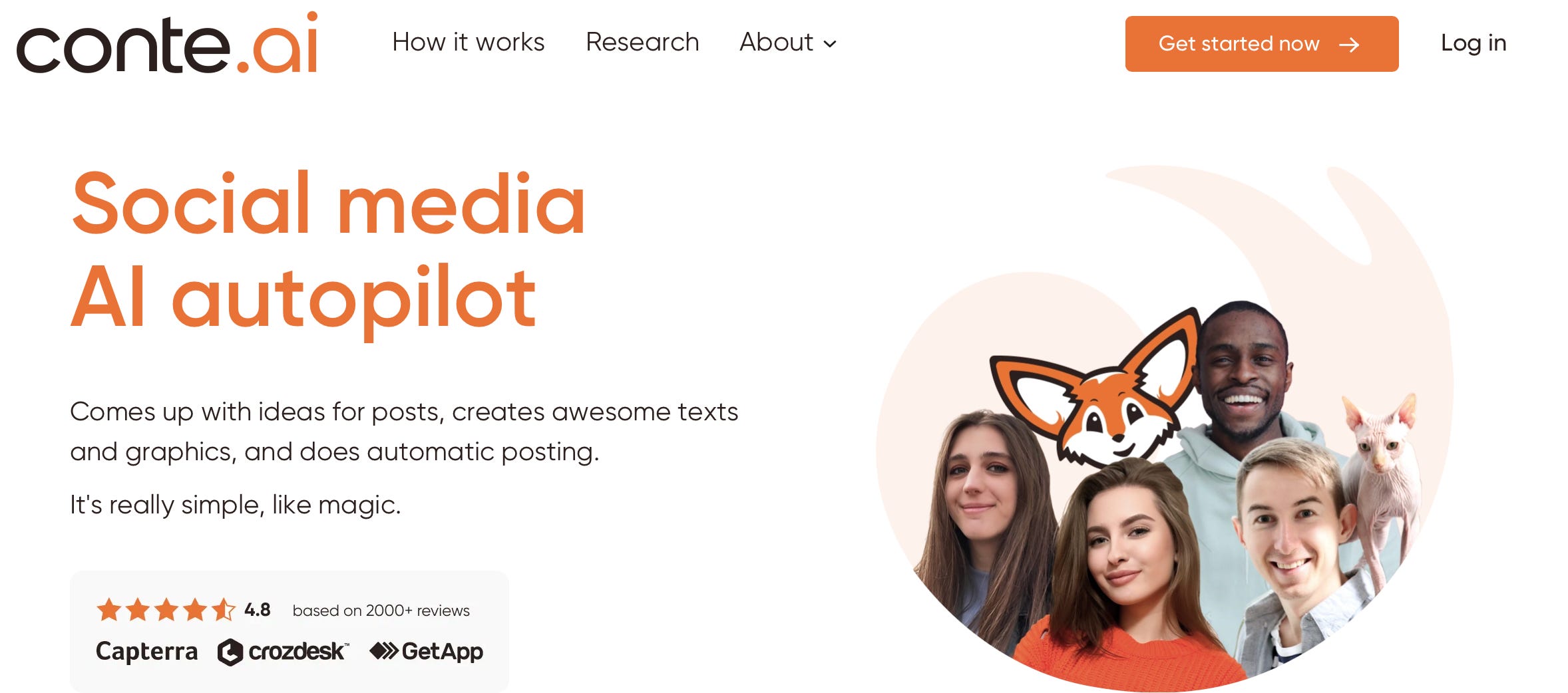
What does it do?: “Conte.ai is an online service, complete with a proprietary system, enabling high-quality content drafting while operating on a limited budget. Ultimately, the service is a complete social media profile management system, perfect for smaller businesses.” It is a ‘social media autopilot’ tool, that uses AI to come up with ideas for posts, creates awesome texts and graphics, and does automatic posting for those channels
Why would I need it?: Brings the buzziness and potential of AI in the hands of social media marketers, anyone who wants to automate their social media presence and boost your brand awareness and reputation in an easy-to-use fashion
Can you tell how much it costs easily from their website?: Costs $39 to ‘test’ the platform which includes some competitive analysis and posts. Otherwise, $369 to $1,369/mo depending on how competitive your industry is
📚 Marketing Research
Connecting the academic world with the practical, this section picks finds an interesting research study and connects it to real-world applications
Title of the Study: 2023 State of Marketing Software Adoption Report: Emerging Tech Trends to Watch in 2023 | Link

‘Tweet’ Summary: In Capterra’s 2023 State of Marketing report, marketers are betting on emerging technology including advanced cybersecurity, software and application integration, automation, and artificial intelligence. While 67% of marketers plan to increase and spend more on their marketing technology in 2023, interestingly, about 58% of them also have buyer’s remorse around a technology they acquired in the past 12-18 months, signaling a continuing challenge in aligning needs with impact
MTDL’s Take: The biggest reasons for regret over acquiring a new technology includes difficulties measuring or proving a positive return on investment, technology lacking support services, and the total investment was more expensive than anticipated. Having a key plan can avoid some of this headache and despite the buzz around cutting-edge tools like AI and automation, some of the most basic foundational tools, like Project Management and CRM platforms, are the ones that still require further refinement and investment in most typical marketers’ tech stacks
📰 Stack Notes: Industry News & Updates
Interesting and noteworthy reports, surveys, and big industry news
How to ADAPT to Inflation. From McKinsey, following their ADAPT (Adjust, Develop, Accelerate, Plan, and Track) framework is a new approach to thinking about how to respond to increases in prices to best maintain long-term loyalty
The Future of Personalization: From Shopify, the trends that are driving personalization, where “71% of consumers expect companies to deliver personalized interactions and 76% get frustrated when this doesn’t happen.” However, a large delta exists where “85% of brands believe they’re offering personalized experiences, only 60% of consumers seem to agree.” Personalization often requires a mountain of data to use effectively and in this more privacy-sensitive world, balancing a strong customer experience while also respecting boundaries, is an act that organizations will continue to explore in 2023
How to Recession Proof Your 2023 User Research Plan: From User Interviews, 5 ways to help ensure your UX plan doesn’t fall by the wayside in 2023 as a ‘less-than-critical’ item, when leaning into listening to your customers should become more important. Good UX research helps inform design, product development, marketing, and other business decisions. Using the tools you have available, creating a strong feedback loop, and democratizing insights are a few strategies offered in this insightful article
Keep stackin’ your curiosity,
Sam